Learn how to choose and equip a long distance overland vehicle, and camping gear that best fits your individual needs. Why you might make one choice over another depending upon your situation. This book is divided into three sections: Getting started, gearing up for extended overland travel, and going out on the trail. Content includes the basics of choosing a primitive camp site, cooking on the trail, proper hydration, choosing clothing based upon the fabric blend and not appearance, driving over different terrains, getting unstuck, choosing and using recovery gear that’s appropriate for your vehicle, traveling with others, communication options, maintenance, and much more. Throughout the book there is a focus on traveling in harmony with nature and leaving no trace behind as you travel and camp.
Canada and the United States combined is larger than the South American continent and almost twice the land mass of the entire European continent. You could easily spend a life time exploring the wonders of these two nations and yet not see all the wonders they have to offer.
October 17 update:
After a successful book launch at Overland Expo East I have returned home and updated this web site to include online sales of my book through PayPal. Purchases can be made either through your PayPal account or directly with your credit card. Books purchased through this web site will be autographed by the author. At this time I only have boxes sized for purchasing a single book, so if you wish more than a single copy please make separate purchase for each copy. If there is a demand for purchases of more than one copy I will see about ordering larger boxes. Purchases outside the United States require a different method of shipping at a higher cost. Sorry but until I get shipping costs figured out sales are to US addresses only.
Section I - Getting started and living an overlanding lifestyle which includes being a steward for the land and doing no harm as we travel
Chapter 1: Overcoming common impediments 1
Chapter 2: Access to primitive trail overland travel 11
Land history of the United States and Canada and how it defined where primitive overlanding opportunities still exist. How management of national, state, and provincial parks, tribal lands, and public lands affect overlanding opportunities.
Chapter 3: Tread lightly to cause no harm to the land or life that lives there 21
We each need to be a steward of the land and do no harm while we travel if we want the land to remain open.
Chapter 4: Dog considerations 27
Should you bring a dog on a trip? Training, Health considerations, Crossing the border between the United States and Canada, Park rules.
Chapter 5: Trip planning and border crossing considerations 35
Deciding where to go, Regional weather considerations, Border crossings, bringing children and hunting firearms across the border, required documentation, Encountering a lone occupied house or ranch building on a trail.
Section II - Gearing up for overlanding - what you should be aware of and why you might make one choice over another to best fit your individual needs
Chapter 6: Choosing a vehicle that will best meet your individual needs 51
Decide what you want to do and with how many people, Decide on a style of travel and camping, Things to consider and look for when choosing a vehicle.
Chapter 7: Vehicle setup and design parameters 75
Strategies for setting up a vehicle for long distance overland travel, Optimizing a vehicle to support different camping styles, Setting a vehicle up to handle primitive trails.
Chapter 8: Packing your vehicle 107
Have packing lists, Verify your gear is ready for use, Packing for weight distribution, Strategies for efficient placement of your gear with an eye to having things accessible when you need it in different weather conditions.
Chapter 9: Selecting Camping Gear 113
Factors to consider when choosing equipment for different styles of camping and attributes to look for when selecting gear to meet your needs, Food and water storage, Sleeping needs, Shelter - tents, awnings, and canopies, Camp stoves and lighting. Your first aid kit.
Chapter 10: Clothing Choices 149
What clothing needs to do to keep you alive and how to choose clothing suitable for the environments you will be traveling through, The characteristics of fabric and fabric blends defines clothing performance, Plant based fabrics, Animal based fabrics, Synthetic fabrics, The concept of layering, Climate related clothing features to look for.
Chapter 11: Communications 177
An overview of different modes of communication, their advantages and disadvantages.
Chapter 12: Cooking on the trail 187
Selecting gear to best go with your individual style of cooking on the trail, Attributes of different cooking materials and how they affect the finished meal, How altitude affects cooking times and how to alter recipes for different altitudes, How different types of wood affects the flavor of food cooked over a fire, An introduction to traditional sourdough and plank cooking, and more.
Chapter 13: Drinking Water Considerations 211
How to determine the amount of water you need to carry in your vehicle, Potable water sources and availability, Obtaining water from natural sources.
Section III - Going out on the trail: Preparation, Camping, Driving, Vehicle recovery, and After the trip
Chapter 14: Trail Etiquette 219
Common sense rules for playing well with others on the trail.
Chapter 15: Vehicle Pre-trip Preparations 227
Your vehicle should be in very good condition and trail ready before you leave for your trip, Vehicle checks you should make before loading your vehicle.
Chapter 16: Vehicle and trip safety 237
Being safe on a trip is mostly about attitude, the conscious decision to do things safely, and situational awareness, Always let someone know where you are and where you are going, Never abandon your vehicle, Your survival kit.
Chapter 17: Choosing a campsite 245
You can’t camp just anywhere, Camping rules to always follow, Weather happens, Some geological considerations, Camping near water, The campfire, Mosquitoes, bees, and bears OH MY!
Chapter 18: Maintenance during the trip 261
Formalizing maintenance days to clean and maintain the vehicle, your gear, repack, top off water, fuel, and groceries.
Chapter 19: Driving on primitive trails in different terrains 265
The three rules for driving on primitive trails, The differences between maintained, seasonally maintained, and unmaintained roads, Driving on slopes is all about keeping the center of gravity line inside the gravitational wheelbase, Driving up dirt or rock steps, Dealing with deep ruts and erosion gullies, Water crossings, Driving over rocks, through snow, and sand.
Chapter 20: Vehicle Recovery 305
The basics of how to get unstuck and the gear to help you safely get unstuck, The characteristics you should be looking for when choosing recovery gear that will work with your vehicle and how to safely use that gear.
Chapter 21: After the trip 337
When you get home don’t just toss your gear in a corner of the garage and drive your vehicle to work with a trip’s worth of mud and dirt to show the people you work with that you went on a trip. If you want to reuse your gear for the next trip and if you wish your vehicle to last you need to take care of it.
Preface
This book is about overland travel in a vehicle with four or more wheels throughout mainland United States and Canada. It is written for both experienced travelers and for those who have never ventured off pavement or have previous camping experience. There are no assumptions made as to the reader’s vehicle choice or their style of camping.
You might ask why write a book focused on travel in Canada and the United States. Most Canadians and Americans have seen very little of their own countries. Instead they dream of far away places forgetting the wonders just down the street. Canada and the United States are the second and third largest countries in the world. Combined they have a land mass of 7,569,622 square miles (19,605,231 sq km). To put this into perspective their combined size is larger than the land mass of the South American continent and almost twice the land mass of the entire European continent. These two countries share a common language and heritage, the longest peaceful border in the world, and are almost completely surrounded by coastal lands. Here you will find natural wonders not found anywhere else in the world, large desert areas, rugged majestic mountain ranges, glaciers, forests, lakes, rivers and about two million square miles of wild frontier. You could easily spend a life time exploring these wonders and yet not see all they have to offer.
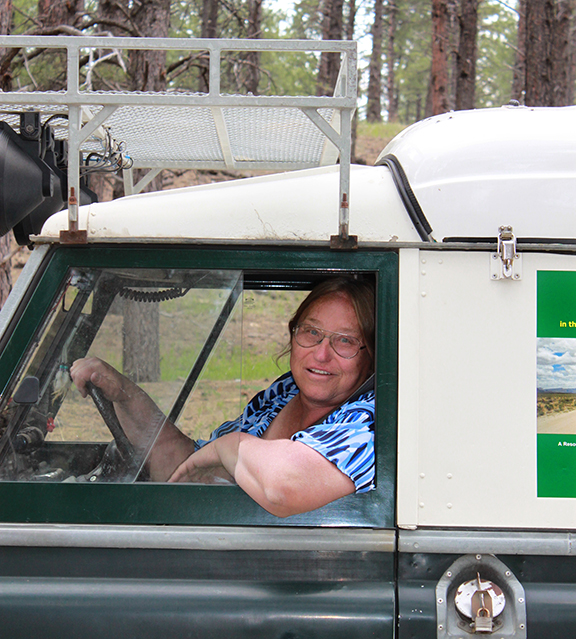
This book represents what I have learned in 38 years of travel and camping in my 1960 Land Rover Dormobile and my understanding of what gear is currently available in North America. New inventions and technologies are bringing new products into the market every year. When shopping for new equipment it is always a good idea to look for new products that might be an improvement over what was available when this book was written, but always keep in mind that newer is not necessarily better.
NOTE: All measurements included in this book are in the system used in the United States with their metric equivalent following in parentheses.
Introduction
The world beckons and life waits for no one
As I thought about the people I have traveled with and those I have met in campgrounds along the way I quickly realized that there is no individual I could point to and say I am writing this book for you and for others like you. We each have our own preconceptions of what constitutes expedition style travel, overlanding, or just plain traveling. Some people want to be on the trail soon after rising and spend the whole day traveling. They tend to have little or no interest in spending daylight hours relaxing around camp and often put minimal effort into their overnight camp or food preparation. Others prefer a more leisurely style with late starts and stops long before dark. For these people a comfortable campsite and dining are often a high priority.
We each have different comfort levels regarding how primitively we wish to travel and camp. Those comfort levels change as we become more acquainted with nature and more experienced with traveling. Comfort levels and needs also change as people age, family size changes, and to compensate for disabilities.
There are many ways to travel through North America and no one way is better or more pure than another as long as it meets the traveler’s goals and is within their comfort range. We are all different in our needs and experience levels. Because of this one set of rules will not fit everyone’s needs. No one vehicle is best for everyone nor will one list of gear work for all. Instead of a how-to I will attempt to provide you with an understanding of the kinds of things you will most likely need to know and why you might make one choice over another. If you understand the “why” you are more apt to remember the “what”. If you understand the advantages and disadvantages between different choices you can better make the choices that will work best for you in your travels. Because goals and means are different for each of us I decided to write this book as more of a “why-to” than a “how-to”. There are a few places where I give specific rules, such as sections discussing trail etiquette where a single set of expectations are important to traveling in a group, where I discuss safety, and ways to minimize our impact on the environment.
Throughout the book I emphasize traveling in harmony with nature and a “leave no trace behind” style of traveling and camping. I firmly believe that we should do no harm to the environment as we travel and if anything leave the way behind us a little better than it was before we passed through.
The purpose of this book is not to turn an inexperienced overlanding novice into an expert. Rather it is to provide a solid foundation from which the reader can grow through hands on trail experience and possibly training. Hopefully it will keep you from making the common rookie mistakes, especially those that could leave you in a life threatening situation without a clue of what to do.
As Roy Rogers and Dale Evans used to sing “Happy trails to you”
TeriAnn
About the author
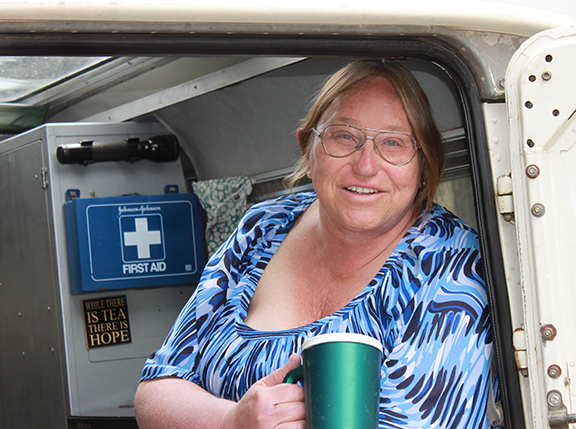
TeriAnn has spent over 38 years exploring North America in her 1960 Land Rover Dormobile. Shunning rigidly planned routes she navigates mostly by whim where destinations are optional and not necessarily desirable. During her decades of traveling she has developed a strong bond with the land that includes a “do no harm” traveling ethic. This includes respecting historic artifacts, native cultures, and a “leave no trace behind” style of travel and camping that minimally affects the plants and animals that call the places she travels home.
Having worked in the field of product safety for 12 years, first at Underwriters Laboratories and then at Hewlett Packard, she constantly evaluates situations and gear in terms of being safe for their intended use. Since leaving the corporate world in the 1990s, most of her camping trips have between three weeks and three months in length. After purchasing her Land Rover in 1978, she has taken a systems approach to modifying the vehicle to best meet her long duration travel and camping needs. While TeriAnn makes her home in Flagstaff, Arizona she is often seen somewhere in North America out on a trip with her Irish Wolfhound.
“How do you describe the joy of a morning in a new place, watching the sun rise over a new natural landscape, and listening to the world around you awaken to a new dawn? Or the sense of absolute freedom gained by traveling where whim and the moment takes you, the serendipity of an unexpected view, the discovery of a clear gurgling mountain stream, the feeling of home on a rocky coast at the edge of a redwood forest. These are feelings akin to a religious revelation that I feel traveling and exploring new places on the wings of whim.”